
01 / Identification
Read the car.
Then the card.
Build an identification trail from base markings, packaging and the details you can actually see.
Open the identification guideA number on a card. A detail in the paint. Start with a source, then build the story of the car in your collection.
Look up or compare the two listings.
Select a row · ↑ ↓ move between results
Loading the reference desk…
A selected historical index. A catalogue match does not authenticate an individual car. Read all 15 references →
Three ways to turn a car on your desk into a collection you understand.
Build an identification trail from base markings, packaging and the details you can actually see.
Open the identification guide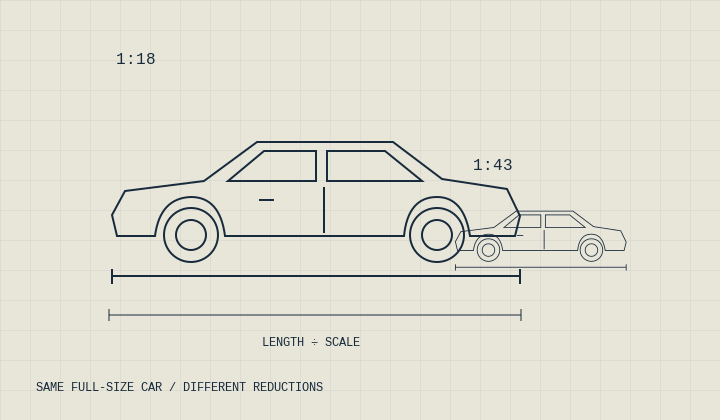
Compare four scale ratios and calculate model length from a full-size measurement.
Enter the scale lab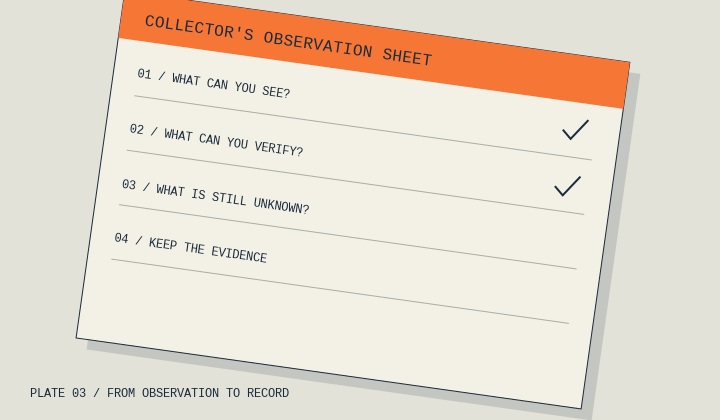
Capture your observations, evidence and unanswered questions in one exportable worksheet.
Open your workbench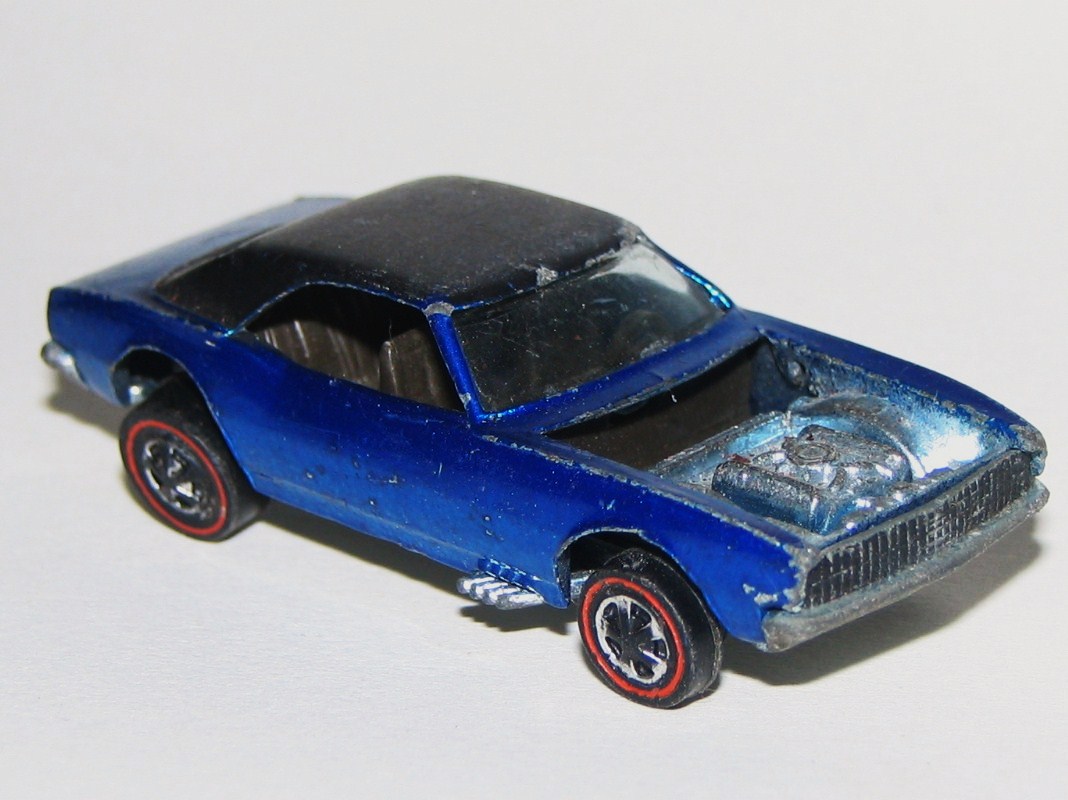
Mattel’s 1968 vehicle list pairs Custom Camaro with stock number 6208. This photograph gives us a different kind of evidence: visible paint wear, red-striped wheels and an exposed engine.
The catalogue identifies a release. The photograph documents one object. Keeping those two kinds of evidence separate makes a better collection record.
Look at the evidenceA hypothetical 4,500 mm car becomes 70.3 mm long at 1:64. Change the scale and see how the same car takes up space.
Try the interactive scale comparison →Our starting point is a small set of manufacturer references and practical editorial methods. Explore fifteen catalogue references and two photographic studies, alongside our practical field guide.
 ILLUSTRATIVE GEOMETRY · NOT A MEASURED PRODUCT
